Episode Transcript
[00:00:00] Speaker A: Today, we are thrilled to have Kyle from be active allied health and performance with us. Kyle is an exercise physiologist. Kyle, great to have you on the show.
[00:00:10] Speaker B: Thanks, Jason. Glad to be here.
[00:00:12] Speaker A: Excellent. So on the first show, I might say.
All right, so, Kyle, for our listeners who may not be familiar, could you explain what an exercise physiologist and what makes your profession unique?
[00:00:26] Speaker B: Yeah, sure. University qualified allied health professional that uses exercise as a treatment modality to treat acute and chronic conditions, injuries and illnesses. So that's the stock standard response. I think of it more like, we try to get the benefits of exercise into people's lives that have a myriad of reasons as to not exercise. So, you know, things like, for example, illness, injury, previous illness or previous injury, like mental health concerns, disabilities, anything, where it makes it just generally harder for people to exercise. We're here to help, and we also help with getting clinical adaptation. So not just, you know, getting strong and lifting more, but, you know, creating more. Okay. Getting more independence, blood glucose levels with diabetes, treating depression, treating cancer, specific strength and conditioning, for example. So all this for stuff, I think.
[00:01:18] Speaker A: If I had have known that in my earlier days, that's something that I probably could have had helped with some clients to probably assess them a little bit better.
[00:01:26] Speaker B: A lot of people don't know about us, though. Like, we've only been a profession, I think. Oh, not very long. Like, there's a lot of names for us. So I think in Australia, we're actually the. In terms of, like, the exercise physiology, or we call ourselves accredited exercise physiologists, because, like, that's the. That's the protected term. You know, it's like, clinical psychologist or, like, physiotherapists. Like. Like, that's, like, the actual term, but I just call it Ep. So, EP in Australia has probably made the most leaps and bounds compared to any other country. So we have a great organization in exercise and sports science Australia that, like, champions us. Right. We've got, what do you call it? Medicare recognition, obviously, NDIS recognition. We've got work coverage, a bunch of, you know, recognition as us as a legitimate allied health profession.
[00:02:13] Speaker A: I was actually really lucky when I started training in the gyms. They brought an exfis in to teach us some stuff. They took all of these us brand new, fresh, newbie pts off to the side, and there was an exfis that was coming in there, and everyone were.
[00:02:25] Speaker B: Like, whoa, man, it's got those.
[00:02:29] Speaker A: It's not just about bicep curls. All right, how does your role differ from a physiotherapist. And where do you see the most common misconceptions?
[00:02:37] Speaker B: People who hear ep or hear exercise physiology, they'll hear the main, the middle part, they'll hear physio and they'll, they'll just completely not either register or not really understand the ologist part or the exercise part. So I normally get two responses. I either get one, whereas, oh, sort of like a physio, or I get the other one, which is, oh, like a PT work, really hand in hand with physios. In fact, that's the reason why we actually have physios on my team. Yeah. Is because the, I guess the major difference, you could say is physios go more into that. Musculoskeletal conditions, rehab, diagnosis, treatment, even chronic and long term treatment for someone. And they can even help with things like for example, manual therapy, which is where they rub it down. They can use EMS or electro. What's it.
Yeah, yeah, yeah, exactly, exactly. Those kind of conditions on musculoskeletal and neurological is kind of where the scope kind of overlap. For eps, we do continual learning. I myself am very passionate with cancer treatment, but also I know a lot of clinicians in the field that do specific exercise oncology or exercise for cancer. They go through significant vocational training, so they train themselves. They train under the tutelage of someone who is more versed in it than them. So for example, one person in greenslopes called Doctor Morgan Farley, I did of my research projects under her doctor, Tina Skinner at University of Queensland.
Quick side note, their brains are absolutely insane.
I have never been in a room with words make me feel like they're just explaining all these high level concepts in the most like, so applicable way. For someone who's never heard it before at the time, it's just amazing anyway, but so for them, I would then go learn underneath under them because they're actually researching in the field. They've got the cutting edge research. I would then do further coursework under them or under continual professional development to the point where I can then see this clientele and give them a good quality service. We have our areas that we're really good at. Long story short is the physio would be amazing at acute treatment and diagnosis. An exercise physiologist would be amazing at long term chronic rehab, as well as some specific rehab treatments like metabolic treatment, cardiac treatment, pulmonary treatment.
[00:05:06] Speaker A: Can you diagnose?
[00:05:08] Speaker B: Goodness, no.
[00:05:09] Speaker A: No. Okay, so for the diagnosis, they need to go to someone first. So if I'm thinking hey, Kyle's going to be awesome for this guy. We don't know exactly what he has. I might send him to a physio first, who would then refer him to you.
[00:05:23] Speaker B: Yeah, exactly. Because we have the luxury of having episodes and physio together under the same roof, we get to give the best treatment while also just minimizing costs as much as we can. So one of our physios, he is an amazing musculoskeletal diagnostician. Like, my goodness.
Like, I've seen him in practice myself, because there was a client that I had where he initially came just because his knee was giving him a bit of pain. I said, hey, Alex. I said, hey, Alex, would you mind coming in for a joint consult here? Because this isn't progressing the way that I would like it to progress. Like, it's not progressing at the rate that it should. Even though he was the client was doing the work, there was other performance indicators that were improving, but just not that particular knee pain. So I just wanted to get a second pair of eyes and have. And it was Alex Alfizia. So then Alex came in. He not even joking, man. It was like 15 minutes. It was absolutely incredible. And did all these tests and diagnosed. I believe it was a minor medial meniscus tear, what do you call it? A treatment guidelines on how the client can go on his holiday, what the expected timeline for recovery looks like, that kind of stuff. And then he then spoke with me. He said, work on his hamstrings, his gastroc, basically work on everything around the knee. And I was able to give the client a program that he was able to do while he was on holiday because he wanted to do a program while I was on holiday. So this is where we've got, you could say, similar scope, but our expertise when working together is invaluable. Physios are good at their jobs, eps are good at their jobs. Let's just work together. Let's use our skill set as best as we can, and let's amp each other up here. That's the main thing.
[00:07:05] Speaker A: Yeah. If it's client first. If we're working on the client first mindset. Exactly.
[00:07:11] Speaker B: That's what.
Exactly. There was one client we got referred to where it wasn't quite sure if he needed physio or ep. I said, hey, Alex, can we do it? Let's do a joint console. You and I both. I'm going there pretty much as to try to figure out what's needed for this person within ten minutes. I'm looking at Alex, I'm like, this is, this is all you, mate. This is all you.
Clyde was in such an acute stage where I was like, there wasn't like any movement. I mean, quite literally a knee extension, no weight knee extension. A literal me taking most of his weight sitting up from a chair, nine out of ten pain. So when it's like that, we've got to look at other modalities. So we've got to look at, hey, perhaps in this case, manual therapy is warranted. Perhaps in this case, the case may be tens or EMS is warranted. That's outside of my scope. This client, he had the goal of sitting up and be able to walk around the house, which is a very important goal. Alex took over for the first couple of weeks, then from there, our other EP, Caitlin, came in. He went from nine out of ten pain with literally any motion, sitting up out of his chair with a four out of ten pain. That is a massive improvement from literally being care ridden in nine out of ten pain.
[00:08:27] Speaker A: And then that's a quality life improvement.
[00:08:29] Speaker B: Like, huge, hundred percent man. Like, like, I mean, people don't really get this, like, when you, when you think of it in that way of, you know, being in a chair a long period of time, right? And that's the only interaction with the environment, then getting up and being able to move independently, that is insane.
[00:08:49] Speaker A: Looking back on something that you said there. So looking from an NDIS and a funding perspective, that was actually nice for you to say, like, hey, I'm doing a double thing, but it's not about us double dipping into the funding, it's about us doing the best. And it might be like, hey, I'm there, you're going, you're in there with the physio, you're going to learn a little bit more, which is nice, and you're either going to go, yeah, this is for me or this is for him. So that's. And it's about that client first mentality, about, okay, what can we do best to support this person and how can we best achievers?
[00:09:23] Speaker B: Yeah, it's literally always, it's always about the client's goals and how we can best get there.
[00:09:28] Speaker A: The importance of the multidisciplinary approach involving exercise phase, exercise physiology, physiotherapy and dietetics. So you briefly mentioned dietetics earlier. Can you elaborate on why this collaboration is crucial in your field?
[00:09:42] Speaker B: There are a lot of ways that it's beneficial. We myself, one of our physios and one of our dietitians have a case conference around one client. That one client will graduate from physio very, very soon and will need a CEP. So this one client is living with breast cancer now with this breast cancer diagnosis, physio, almost the reasons why they were seeing physio kind of take a little bit of a backseat here, because EP can do what the physio is doing. In this case, therapy that the physio was doing was around force prevention and about increasing, like, gait independence, things like that, which is something that the EP can do. Reason why we're getting all together is because there's a lot of evidence with exercise and diet. I only know about the exercise myself. If Maisie was obviously here, we could probably talk about the diet, but I know about the exercise. Influence on cancer, survivability, pre diagnosis and post diagnosis, pre treatment, and post treatment. It's ridiculous. If there's one thing that people get from what I'm about to say right now, if you are worried about any kind of cancers other than prostate cancer, unfortunately, we don't have enough evidence to say that. It's the one where it's kind of age dependent, so we don't really have enough evidence there. If you're worried about things like breast cancer, if you're worried about things like uterine cancer and other, most forms of cancer, just not pancreatic or, um, not pancreatic or prostate, we just haven't have evidence yet. Please exercise 2.5 met hours a week. Gardening a few times per week, doing some housework a few times per week, but then also going maybe for a hike or maybe going on a bike ride or maybe going for a, like a walk that brings you your heart rate up beyond baseline by about 20%.
[00:11:20] Speaker A: So just two and a half hours a week, you're less likely to get something. If you do get something.
[00:11:25] Speaker B: No two, no two and a half met hours, which is a unit of, a unit of measurement. In terms of intensity, that's very little.
[00:11:32] Speaker A: Like, okay, take the ball to the park with your kids. They're going to make you move a little bit. You're going to have to need to test them, or you're going to be moving. Having fun, doing nice?
[00:11:41] Speaker B: Yeah. In terms of efficiency, with, um, with having a multidisciplinary team after this, I've got a case conference with, uh, one of our physios, one of our dietitians and myself. Um, this client is going to be essentially internally referred from physiotherapy to exercise physiology and dietetics. Exercise physiology. Then will then do exactly what the physio was doing, but then add on some exercise specific, cancer specific, breast cancer specific strength and conditioning. So things like loading the shoulder, loading the pectoral girdle, bone mineral density, exercise in there, getting some lower body exercise, getting some balance exercise in there, getting some coordination exercise in there, getting some brain activity exercise in there. And the dietitian is going to, I dare say there's going to be some good quality nutrition going in there as well. And from my perspective, this gets done in 15 minutes. This person goes from getting only physiotherapy to now, cool. They've got ep, they've got dietetics. Let's get this going. I now have gotten a handover from the physiology. We've now collaborated, and we've now got goals for this client, for their, for the, prior to their treatment. That treatment hasn't started yet. This is prime time because much cardiovascular, muscular, skeletal gains possible before treatment starts. And this is where it can all happen. And we run with it.
[00:12:56] Speaker A: This week, when I got into PT ing, and then they're like, okay, so 70% of it's in the kitchen. And I'm like, duh, I chose the wrong one study in two months. That's, that's the thing. Every, everything in our body, everything symbiotic, everything comes together. Our mind, our soul, our digestion, our muscles, our movement, all of that, it all comes together and it's all part.
[00:13:23] Speaker B: Of, you're a PT, so you've had, you've had significant experience with training people, right? And so if, I mean, I can probably, there's probably countless amount of people that have come to you said, hey, I want to lose weight, I want to gain muscle, right? Probably most people, I would say at some point, right? So a lot of people would say that. But as an example, like, if someone, if someone resists constraints, right, and they go to failure, every single, every single sip, they are pushing themselves to the limit. They will trigger the musculoskeletal adaptation for hypertrophy. That, that's the trigger. However, if that same person was not eating any protein and they were sleeping 4 hours a night and they were on the list of drugs, for example, I don't think they would gain anything. They would retain muscle at best, considering that sleep thing, they probably wouldn't. If we have, say, for example, a good quality diet, you know, of like whole foods hitting your macros and you're training to that fatigue, you are going to gain muscle strength, you're going to work towards your goals for us having that in house? We refer to dietitians all the time. Say for example, diabetes is a big one. You have an issue with your blood sugar control. We can refer onwards to a diabetes educator, right? But we can refer to our dietitians. If you have problems with your balance, we can refer ep or physio. So it's. It's more just looking at that holistic view, what is best for the client? At the end of the day, what is best? Don't get me wrong, we do refer out. We can't help the person as best we can. We refer outwards. But how it looks like is I have to then I have to contact that person or to email that person or phone call that person. If I know them, I have to then go, cool. Do you have capacity to take on this client? They say yes, no, maybe, or whichever. They then have to see them. They then have to do initial appointment. They don't have to find out their goals. They have to find out what we've done previously. So in best case scenario, I would give them a handover or at least some sort of note, some sort of objective measures. But whereas I can do this, I can call Maisie up right now and say, hey, Maisie, just checking. Did you say you want vitamin D supplementation? Is that right? Cool. What brand was it again? I'm just with the client now, looking up where to go for chemist warehouse. Thank you very much. I'll just send you a photo real quick.
Sends a photo. Maisie sees it. Yeah, that one, but the 500 milligram one. Sweet. Thank you very much.
[00:15:34] Speaker A: And I imagine, especially when you're working with a lot of people with disabilities, it's generally lifelong. Or if it hasn't been lifelong, it probably is lifelong now. And the frustration was having to repeat to every new health professional they meet. Okay, cool. I have to go through this again now. I have to go through this again. I've said this.
[00:15:59] Speaker B: Mental fatigue.
[00:16:01] Speaker A: Yeah, yeah.
[00:16:01] Speaker B: It's. Well, think of this, right? It's mental and emotional fatigue for this person. And if it's something that is traumatic for the person, they have to relive that trauma every single time. So as an example, say for example, it's an Abi or it's a. Or it's a stroke, right? That's something where a lot of people have a lot of trauma regarding that, you know? And so say, for example, an Abi. Say if it's Abi, they get from a motor vehicle accident, right? As an example, they now have to live through that every single time they tell their story. And for some people, that's an empowering thing. For some people, they. They've gone through the battles, they've, they've, they've gotten the psychological help, or they've just. Or they've just got that mental resilience to be able to go, you know what? I went through that, but it's not going to get me down. Right? I'm gonna, I'm gonna, you know, I'm gonna take life by the throat and live as best as I can. As best life possible. Right. And that's amazing, but for a lot of people, that's not the case. A lot of people have that same, not saying sorry, have that similar experience, but then they, they are disheartened by it, rightfully so. You know what I mean? And so when you look at that, you have to. And then every single time you meet a new person or a new provider, a new even, let's say, a support worker, even, every single time, meeting, support work, every single time you meet a new physio Ep, a dietitian, whatever, every single time you meet a new person who's going to help you with your care, you have to relive that. And that's something that I feel like a lot of people don't think about, that. It can be something that is quite traumatic. I'm not saying every single person with disabilities have a traumatic story, you know, far from it, but it is something to think about. It's the same way you would think about, like, trauma informed care for anyone that went through something that was not the most fun thing in the world. What is? How I'm asking things, have they have to go through this before everything like that? So the more information we can share between, like, the clinicians, obviously, with the consent of the person, but, um, the more information we can share, that's seamless. We can go like, hey, for example, say, if I go to this client, say, hey, I see that Alex was doing some sit to stands with you, as an example, doing some sit to stands with you.
[00:18:03] Speaker A: Hey.
[00:18:03] Speaker B: So I think in order to help us with the goal of, say, for example, breast cancer strain conditioning, to get to that point, we need to blow this up a bit more. So let's see. Go forward for a little bit, but how about, let's try to add some weight to it today. What do you think?
So, I already know what's going on. I've already met the person, I've already talked to them, but I already know what's going on? And I'm thinking seamless from Alex to me, rather than it being Alex, then I'm meeting this person for the first time and then getting to know the history of the person, then going ahead. You know what I mean?
[00:18:36] Speaker A: So just for the people at home with you being the practice, you're still going to be asking permission and having informed consent, meaning that you're going to let why they're consenting to other people in your facility from having. Having that. Sharing that information. So obviously it's beneficial. That's. That's the thing. And when it comes to sharing that information with anyone outside of your organization, again, their privacy and regulations come in and you'll be giving them, again, the informed consent and making sure stand where and why. So that's saying anything wrong there? I'm just thinking there's people out there, like, hang on, why would this guy be sharing all my info?
[00:19:15] Speaker B: But they would call.
[00:19:19] Speaker A: Yeah.
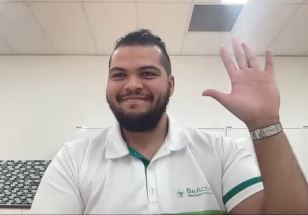
[00:19:19] Speaker B: So everything has to be. Well, I'll show you, for example. Right? So I got on my shirt, but I'll show you this, right? So this is the logo for what we have, right? So I'll show you close to this. Do you see the logo right there?
[00:19:33] Speaker A: That's a Venn diagram.
[00:19:34] Speaker B: A Venn diagram, yeah. Yeah. So the reason it's actually perfect, literally. Right?
So we have, you know, like, Ep, physio, dietetics. Yeah. But right in the middle there, we've got the client. Right. And so we always like, the way I go about it is if you just think of yourself as the client, like, what would I like? I would like to be kept in the loop with stuff. Right. I would like to know that I'm gonna have a dietitian come through. Right. I'm gonna like to know that I'm gonna have changed from Physio to Ep. I'm like, to know why.
[00:20:07] Speaker A: Yes.
[00:20:08] Speaker B: So we talked about that. So before we even started, like, case in point with this client here, before we even got permission to do this, before I even booked this case conference, we had Alex, who's the primary clinician and the only clinician at that time, talk to the client and say, hey, given what. What you said regarding the breast cancer, I do want to get EP and dietetics on board here. Is it okay if I talk to them to try to get them, you know, kind of on board here? That would mean that one of our eps would be coming in instead of me to do more physical stuff with you. But then our dietitian would come over as well, to give you some good advice regarding your plan. How does that sound for you? And then they'll say, yeah, but why am I doing it? And then we'll say the reason why. We'll go into the clinical reasoning as to why in a way the person can understand where the person can provide informed consent. Then we go ahead, start.
[00:20:59] Speaker A: Yeah, so it's good. It's making sure everybody knows what's going on, which is, which is definitely the most. Always going to be important.
Walk us through a typical day for you at be active allied health.
[00:21:11] Speaker B: Well, because I'm. Because I'm the director, my day is very, very different. Yes. A group class at a agricultural college, group exercise physiology class for these kids to improve their focus and improve their strength and their stability. When they go out and they go into the workforce, do some admins do like payroll and things like that, then let's go see a client down in bodes.
[00:21:30] Speaker A: You guys are quite mobile as well. It's not.
[00:21:32] Speaker B: Oh, yes, yes. So we're mobile. Yes, so we're mobile. I go to that client gym, I train them there. Then I go to another gym down in Browns Plains. I see another client and then I see another client. After that day, the day is quite varied of like group class.
Gym, visit gym, visit gym, visit. The typical day of a clinician. It looks like going from home, packing up all your gear, going to the first client's home. It could be any kind of place. In southeast Quean, we normally try to cluster together to save costs for the participants. We go from one client's house to the next one, then to the next one. The next one, have lunch at some point to a client, go to a gym with a client and then go to another gym and then home, for example.
[00:22:12] Speaker A: Okay. Okay. So how, how, how far spread are you? So you said anywhere in southeast Queensland?
[00:22:17] Speaker B: Yeah, yeah. So we are currently servicing Redlands, Logan, Ipswich gold Coast. Oh, and Brisbane.
[00:22:24] Speaker A: Oh, wow. Okay. Yes. Okay, yeah. Well, and do you guys do telehealth stuff as well?
[00:22:31] Speaker B: More. Our dietitian does that because when she does that it's. Yeah. So it saves on a lot of cost for the client. Like we can get people more help in the calendar days, in the 8 hours. What is best for the client at any given time?
[00:22:45] Speaker A: Yeah. What do you find the most rewarding about your work, especially when it comes to impacting people's lives?
[00:22:54] Speaker B: Number one, I call it the, I call it the sphere of influence. So the sphere of influence to me is basically what can someone influence in their immediate vicinity, say someone is confined to their bed for mobility reasons. Actually, I'll use one client as an example. He's got very rare genetic condition. There's one in a couple of million people that have it and most of them don't live past very, very young, young man. And he's absolutely smashing it. So he's got 98 degrees scoliosis, which is where the bend in the spine is actually really, really severe. And it's also twisted as well. So it's not just like, it's just here, it's also here and here. So it's very, very twisted. He has contracture in a fair bit of his joints. So his knees, ankles, as an example. He's got a very mobile one of. One side of his hips that can actually lead to fracture, which is one of the main killers of people with his condition is that the neck of the femur, especially with the torque that can be put on it. And beyond that, also other neurological conditions as well. With him as an example, his fear of influence when I first met him was, he's my client, he's my own personalized. So for, for me, his sphere of influence was right here. And he could reach in real distance. He could reach here reliably maybe, maybe a little bit here with the left. In the time that I've seen him, which has been, I think it's coming on six months now, eight months now. He has regained the ability. And once again, sphere of influence, he is now able to reach fully ahead, like maintain full ahead, be able to reach all the way and also get a torso, twist this way, grab, come back, other side as well when prompted and when not prompted. So if he just. If I put something and he just wants that object, he will do it without me even helping him at all. He can reach above his head. He can reach below. Anywhere he. Anywhere in this vicinity he can reach.
[00:24:45] Speaker A: Yeah.
[00:24:45] Speaker B: Wow. Another thing he can also do, another thing he can also do now, which has something that he hasn't done since he was literally twelve years old, is being able to sit up independently. So being able to cross his legs, sit up, have hands out in front and then head up in front. So in terms of just that, in terms of that, that sphere of influence I'm talking about, you've gone from what, maybe half a meter, you could say half a meter to now, literally. It's getting to a point where his caregivers and his family have to keep a very strong eye on him because there's something that table, if there's something on a coffee table and he wants that something. He will literally go from here, roll over to extend himself, and he won't give up. He wants it. He will go and he will reach as far as he can, which is borderline rolling himself over onto his chest, grab the object and come back.
[00:25:41] Speaker A: Yeah. And that, that's, that. I mean, it's idea. It makes the caregivers a harder job, but it's a win for him. Big, big win. Big one.
[00:25:49] Speaker B: It's like all of us, when, when we first saw him do, do it reliably because we helped him. I helped him a little bit. A little bit. But when he could do it reliably without me prompting him at all, without me helping him at all, literally, I get goosebumps even thinking about it. Seriously. Um, like, we got, we all just kind of like, man, it was, it was theory of fair, fun times, but, yeah. So in regards to what makes, what makes our job worthwhile is that we genuinely see changes in people's lives. Like, we don't feel like we're working. We see clients who previously were literally house housebound because they didn't want to go outside for anxiety, depression, disordered eating pattern, and they now have a positive relationship with food for the first time since they were before a teenager. Things like that. Like, once again getting goosebumps. It's always a left army. Goosebumps. But, um, just thinking about, just thinking about that, right, where like, you genuinely change lives.
[00:26:52] Speaker A: Yeah.
[00:26:53] Speaker B: And, you know, you can do this and you can help people. Like, that's, that's, you live in life. It's the best way.
[00:26:58] Speaker A: That's, that's. Yeah, that's, that's.
I feel ya. I feel ya. It's a similar thing. Yeah, exactly what I mean, it's the good feels. Why do we do what we do? So with your experience, how do you tailor exercise physiology practices for individuals with disabilities? What are some of the challenges and triumphs you have encountered?
[00:27:19] Speaker B: Well, the triumphs, I mean, we just listed some of the triumphs, you know, just changing people. But the. Everyone has their own individual barriers, everyone has their own individual goals, everyone has their own individual circumstances. Right. And so you as a PT, you probably know exactly what I'm about to say with this. And one, there's no one approach for every single person. There's just simply not. Like, there's. There's barely one approach for two different people. You know, I mean, it's, it's. I'd be shocked if I could find one approach that fits two people perfectly. Like, I'd be very, very, very sure. I've never counted that so far. And so basically what we need to do is we need to deconstruct what they want. So what is their goal? Can that be measured? Can that be improved? Is the subject of objective. What is it? You know what I mean? So you first got to categorize that goal and the more data we can get on that goal. So say, for example, I want to be able to walk again, or I want to be able to go out with my family at the shops. It's like, okay, what is stopping you, essentially? So it's like, well, you know, I've got severe anxiety, depression, a metabolic condition. They'll also have a heart, a heart condition. They'll also have musculoskeletal pain. That's five different barriers I've listed before. I even get to things like environmental barriers or task specific barriers, like, can they drive? Can they take themselves? Do they have funding for a support worker to help them get to that point? Do they have families help to get them to that point? Do they have friends? Help get. Have they made friends? So all these different other things you're looking at and you're saying it's no longer just gets stronger. This is a multifaceted, I've just named, like ten things that could be variables for this one single goal. And then you're thinking about, like, can this thing be measured? Can this thing be worked towards? And you got to break every single part of that down. So just that point alone, before they even give me the other goals that they're after, that alone is a full exercise program with a full contingency plan with barriers. A contingency plan for non adherence. You've got all these different factors in there. Then you can go, well, now I've got that. Now the exercise part is simple. The exercise part is probably the easiest part, but then you also have to get buy in from the person. Exercise program is the best can be the best program in the world. If the person doesn't do it, it's the worst program in the world.
[00:29:18] Speaker A: When I first started pt is, they're like, what's the best exercise program? And they made us all spend like half an hour and writing the best program. And then they said to us, they said, it's the one that gets done.
And it is. It's the same best meal plan. It's the same as it's. If you need chocolate in your meal plan, you need chocolate in your meal plan. Probably not for practice, what specific disabilities would benefit the most from working with exercise physiologists?
[00:29:44] Speaker B: Okay, my immediate answer is to say pretty much almost all of them that I can think of. We'll talk about specific ones. So we'll talk about, for example, mental health. Yes. So, like, as a treatment modality as well as a mood regulator and, like. I'm sorry, emotional regulator and like a ground. Like a source of grounding. It's. Yeah. ASD and other developmental kind of conditions. Definitely. Because there are movement delays in the ability to execute different movements. That's the direct result of the disability, of the. Of the pathology, which then creates these movement deficiencies, which then decrease likelihood of engaging in different activities in society. Case in point, difficulty with their gait. Like, they just walk in a different way. They've always done since they were a child because they just never developed a certain pattern. Then they're going to find it hard to catch the bus and find it harder to engage. Go to the shops, going to find hard stuff. Right. Whereas if we're even in adulthood, train those. I'm working with a client right now with intellectual disability. That is, I'm training his gait to be able. And training his. Understand his left. Sorry, his left and right hands, left and right feet. Being able to navigate society because he just never was taught that.
[00:30:57] Speaker A: What sort of ages is this? Like, is there. Is there a cutoff as to when. I mean, learning your gait is something that you do. Like, how many steps do you take? How many reps is that in a day, in a week, in a month and a year?
[00:31:13] Speaker B: Because it kind of falls into the dynamic of, like, sprint training, for example. Like sprint training or, like, running technique, right? Everyone's like, oh, yeah, do running. Running training, running. Take running technique, gait technique, all this kind of stuff, right? But, like, when they. When they do the activity at a sufficient level of intensity, they're going to default back to whatever's easiest, whatever. Whatever movement strategy the body does to be most efficient. Right. In terms of resources, in terms of execution, everything. So we have to. The art is making the desired outcome the most efficient way of doing something. So you got to look at it from a neurological perspective. Like, what is the firing pattern here? We're going to look at what is the limitations? Is there a muscular skeletal limitation? Is there a muscle.
Sorry, a skeletal limitation? A muscle muscular limitation? Is there a neurological limitation? Is there a. Get it. Let's get that treated. Let's get it out of the way so that the body finds the most efficient way possible, which should be the way that you're doing it. Like, should be the way that you're trying to get across. So it's almost like you're manipulating the strengths to get to that point. And so, yeah, people with ASD and intellectual disability can definitely benefit from seeing an EP, 100%. So basically, all metabolic conditions can be improved with. With exercise physiology, neurological conditions. So people with stroke, with Parkinson's, with Alzheimer's can all benefit from seeing an EP. For, once again, movement control for, sorry, a neurological conditioning with coordination.
Basically, that's why I'm saying most people can benefit from seeing it. There's very small. The people that wouldn't benefit from seeing an EP. Chronic pain is another one that can benefit from seeing an EP. A lot of people can.
[00:32:50] Speaker A: Yeah. So someone's informal support or someone that's managing themselves could call up and say, hey, look, you know, I spoke to Jace, or I read a thing, I watched this podcast and I'm talking about, and I was wondering if it's going to be good for me. Ring, ring, call up, you guys, or another exercise physiologist and say, this is what I've got. This is one of my goals. How can you help? Before they go in and they start, you know, spending money, then they could rule themselves in or out right there.
[00:33:17] Speaker B: Exactly.
[00:33:18] Speaker A: Yeah.
[00:33:18] Speaker B: In fact, I would honestly, I prefer that because a lot of people don't know if they need us. You know what I mean? And it's. It's very easy to say because a lot of people can benefit from seeing us. It's very easy to say everyone should see us. But like, once again, comes down to, is that the most beneficial use of their time, their funds, can they be.
[00:33:35] Speaker A: Used anywhere else for our listeners who might be interested? Knowing someone who can benefit? I already know the answer to this, but is there support available through the NDIs for people that need what you guys offer, which is exercise physiology, dietetics and physio?
[00:33:50] Speaker B: Yeah, there's three main codes. Exercise physiology actually has two codes. Improved health and well being, which is the twelve code, improved daily living, which is the 15 code, both in capacity building, as far as I'm aware. Physiotherapy, which is in the either improved daily living category, which is also in capacity building. We have dietetics, which is in the improved daily living category. I actually also think the twelve category also isn't pretty sure, but there's different kinds of funding you can look out for. So if you ever wondering, basically the ones that you. The OT funding or the ones you'd see for that can also be used for EP, physio and dietetics.
[00:34:25] Speaker A: Same sort of wheelhouse.
[00:34:26] Speaker B: Yeah, exactly, exactly. It just depends on what the goals are. If someone just wants to be fitter and healthier and they just have a lot of conditions that need to be managed, then probably improved health and well being. But if someone wants to be able to walk again, if someone wants to be able to be more independent or being able to transverse the environment a bit better, then probably improve. Day living is progress you're after. But if you have any questions, literally ask your. If you have a support coordinator, ask your support coordinator. If you have a plan manager, ask your plan manager. Or most eps where we just want to help. So, like, a lot of us go into the field, like, where personalities are very, like, help focused kind of thing.
[00:35:01] Speaker A: How did you see my next question?
Were you reading that from a.
So why did you get into EP and what. Why did you get into disability specific stuff?
[00:35:12] Speaker B: Always wanted to help people. Like, I wanted to be a doctor at some point, then I wanted to be a virologist. Cause I saw a lot of sickness and I wanted to be a. What do you call a biomedical scientist, like doing something with research into cancer. Then what do you call. I got more into athletic kind of stuff and injuries, so I wanted to do stuff with that and then found out. Then I thought, oh, man, there's no job that I can have where I can still work with people in a way that's like, physical. So then I thought of being a physiotherapist. And then my exercise physiology mentor to this day, he saw me and he poked his head out the window because I was at his workplace, which was a gym at the time. Have you heard about exercise physiology? And I was like, I have not. I walked out of that office thinking, this is what I want to do. And why disability? Because, man, I just love seeing changes in people's lives, man. You get the most benefit. Someone with a severe disability that's affecting them day to day. You can stand now, like, how good, you know what I mean?
[00:36:08] Speaker A: Yeah.
[00:36:09] Speaker B: You can actually walk around. You can go to the shops now. Like, how many wins do we have where the person's literally just like, oh, yeah, I can. Like, I went to the shops and I can carry the. The grocery bags in my one hand. I don't have to put in the trolley. Like, that's a massive win, you know what I mean? And that once again, getting booted. This is the third time.
[00:36:30] Speaker A: Happy to help.
[00:36:34] Speaker B: In that situation. Right. You're genuinely changing lives and is. There's nothing better? Well, I think it's midwives, but when they're bringing in children into the world, I look at it and I say, like, the best part of my job right now is literally seeing lives change. You've reached your goals. You don't need me anymore. Like, that's great.
[00:36:51] Speaker A: Yeah. Cool.
I enjoy this similar thing, but from what you were saying, from what's along every step of the way, all of the things that you were interested in, you wanted to all involve fixing. So you've. You've always wanted to help and fix and. And make things better.
[00:37:08] Speaker B: Exactly, yeah. It's just being able to do that in a skill set that I enjoy in a way I can tangibly measure progress over time. I can help people like this. It's just overall, man, it's the fun time. It's just a super fun time.
[00:37:21] Speaker A: Yeah. So it's a. It's a great gig. I'm, I'm, I'm. Yeah, very similar to that. So switching up gears a bit. Have a bit of fun. Can you share some surprising or unexpected moment you've had during your career?
[00:37:38] Speaker B: So there's a bunch of times where there's been some clients who have had bowel distress and one of the benefits of exercise actually helped with bowel regulation. Yeah. The amount of times I've just been, like, helping these clients and I get, like, farted on and it's like, cool, no worries, that's fine. The whole, like, session, just both of us start absolutely cracking up.
[00:38:00] Speaker A: Good times. Good times.
And if you weren't an ex fizz. Sorry, ep, what would you be doing? Like, any hobbies or passions that might surprise our listeners?
[00:38:12] Speaker B: Yes, actually, this is going to sound really weird. I'd actually, if there was no such thing as working and I just did what I wanted to, I'd be definitely be a chef. Like, I would hundred percent be a chef. I love cooking. I love every single part about cooking. Every single part. The recipes, the making recipes. I don't even use recipes, I just do it myself. But I just. Every single part of it, I like smoking meat, I like brining. I like. I just don't like baking. Bacon is the one where I'm kind of. But everything to do with cooking, it's.
[00:38:39] Speaker A: It's more chemistry, whereas when.
[00:38:42] Speaker B: Yeah, baking, cooking, you can.
[00:38:43] Speaker A: Yeah, a bit more of this.
[00:38:44] Speaker B: She'll be right.
Exactly. And it's more taste. So I just. I love that. I love that, so I'd definitely be a chef.
[00:38:51] Speaker A: Yeah. Cool, cool, cool. Thank you, Cole. It's been enlightening talking to you. I've definitely learned some stuff. Where can our listeners find more about your work and be active? Allied health.
[00:39:02] Speaker B: Be active. One word. Be active. Allied health and performance. Where? I've got a website, we've got Facebook, we've got Instagram. Pretty much give me a call anytime you want. 1305 one seven.
And you can send any kind of question you have to infoeactiveahp.com dot au awesome.
[00:39:20] Speaker A: And I will be sure to supply some details on how to contact you through through this, at least on my website and on YouTube. All right, thanks for listening to vicarious insights. I hope you guys have learned something today. I know I have. Remember to subscribe for more insightful discussions. Stay healthy, stay motivated. Thanks, Kyle.
[00:39:41] Speaker B: No worries. Thanks, Jason.